
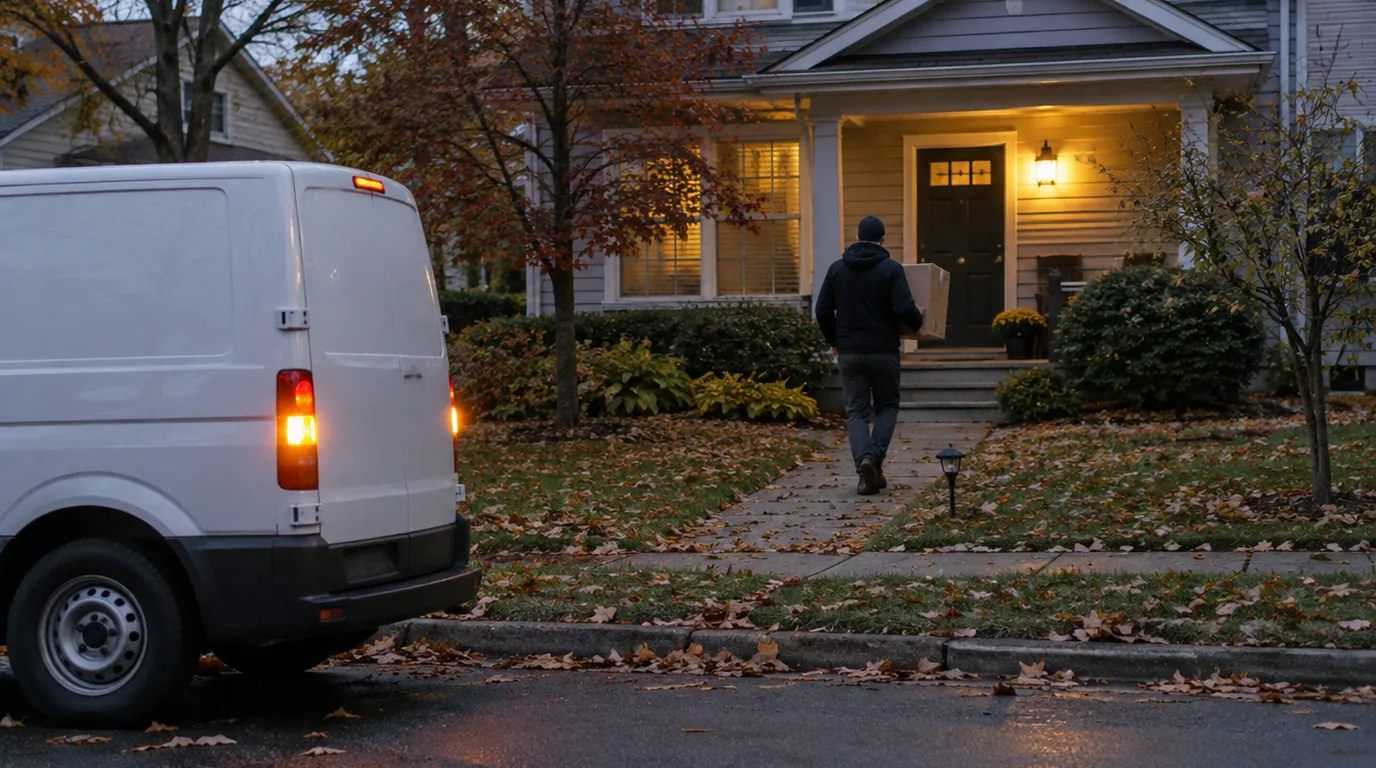
Amazon delivery drivers in the US are paid in two very different ways. Most drive for a Delivery Service Partner (DSP), a small company that employs drivers to deliver Amazon packages. Amazon says DSP drivers average nearly $23 an hour in 2026, rising to nearly $24 an hour in 2027 after its latest $1.9 billion investment. Amazon Flex drivers are independent contractors who use their own cars; Amazon says most earn $18 to $25 an hour, but that’s before fuel, wear on the car and self-employment tax. For comparison, the typical US light truck driver earned $21.57 an hour in May 2025, according to the Bureau of Labor Statistics.
The key figures
| What | Figure | Source |
|---|---|---|
| DSP driver average, 2026 | Nearly $23 an hour | Amazon, 2025 DSP announcement |
| DSP driver average, 2027 | Nearly $24 an hour | Amazon, September 2026 announcement |
| Amazon Flex, “most drivers” | $18 to $25 an hour, before expenses | Amazon Flex |
| Flex, measured median | $20.89 an hour, $83.14 per block (2025 trip pay including tips, before costs) | Gridwise driver data |
| US light truck drivers, median | $21.57 an hour ($44,860 a year) | BLS, May 2025 |
| US postal mail carriers, median | $29.11 an hour ($60,550 a year) | BLS, May 2025 |
| Amazon warehouse seasonal staff | $20 an hour average | Amazon, October 2026 |
DSP driver vs Amazon Flex: two different jobs
Searches for “Amazon driver pay” mix these up, but the deal is completely different:
| DSP driver | Amazon Flex | |
|---|---|---|
| Who pays you | The DSP (a separate company), not Amazon | Amazon, as a contractor |
| Status | Employee (W-2) | Independent contractor |
| Vehicle | DSP’s branded van | Your own car |
| Fuel and running costs | Paid by the DSP | Paid by you |
| Schedule | Set shifts, usually long daily routes | Pick “blocks” of a few hours in an app |
| Benefits | Healthcare and paid time off for full-time drivers | No employee benefits (app rewards only) |
| Taxes | Withheld from your paycheck | You pay self-employment tax yourself |
Amazon is explicit that DSP owners are the employers: each DSP decides how much to pay, so pay “will vary by DSP and geography.” What Amazon controls is how much it pays the DSPs, which is why its announcements talk about average driver pay rather than a fixed rate.
How much do Amazon DSP drivers make?
Amazon’s own figures show a steady climb. Its 2025 announcement said that year’s $1.9 billion investment would help DSPs raise driver pay to a national average of nearly $23 an hour. In September 2026 it announced another $1.9 billion for 2027, lifting the average by roughly another $1 to nearly $24 an hour, and said it expects driver pay to have risen by an average of 16% nationwide over the past three years.
In annual terms, at a 40-hour week:
| Hourly | A year | |
|---|---|---|
| DSP average, 2026 | about $23 | about $47,800 |
| DSP average, 2027 | about $24 | about $49,900 |
| US light truck drivers (median) | $21.57 | $44,860 |
| US postal mail carriers (median) | $29.11 | $60,550 |
So a DSP job pays a little above the typical delivery or light truck driving job, and below a postal carrier. A new UPS driver starts on a similar $23.00 an hour, but the Teamsters contract lifts that to about $47 within four years: see how much UPS drivers make.
All DSPs provide healthcare coverage and paid time off for full-time drivers, Amazon says, and many add 401(k) plans and tuition reimbursement. That’s worth real money, and it’s what Flex doesn’t have.
How much does Amazon Flex really pay?
Flex pays per block: a set amount for a route that usually takes three to five hours, shown in the app before you accept it. Amazon says most drivers earn $18 to $25 an hour, depending on location, tips and how long deliveries take. Gridwise, which tracks earnings for its app users, found a 2025 median of $20.89 an hour and $83.14 per block in trip pay (block pay plus tips), or $21.35 an hour and $85.00 per block once all other earnings are added.
Those are all before costs, and that’s the catch. You’re paying for the car, and as a contractor you owe self-employment tax of 15.3% on most of your profit (12.4% Social Security plus 2.9% Medicare). Here’s a worked example using the median block and an assumed 50 miles of driving:
| Step | Amount |
|---|---|
| Median block trip pay (about 4 hours) | $83.14 |
| Car costs at the IRS rate, 50 miles x $0.76 | minus $38.00 |
| Profit before tax | $45.14 |
| Self-employment tax (15.3% of 92.35% of profit) | minus $6.38 |
| Left before income tax | $38.76, about $9.70 an hour |
The IRS rate (76 cents a mile from 1 July 2026) is meant to cover the full cost of running a car: fuel, maintenance, insurance and depreciation. If your car is paid off and cheap to run, your real cost is lower and you’ll keep more. But the gap between “$20 an hour” and what’s left after the car is the single biggest thing most Flex guides leave out. Track your miles: you can usually deduct them, which cuts the tax bill.
Peak season: what changes in November and December
Peak is when both options pay best and are easiest to get into.
- Flex: demand is at its highest, and Amazon shows a block’s pay before you accept it, so you can pick the better-paying blocks. Tips are never guaranteed, so don’t count on them.
- DSPs: peak weeks are the busiest of the year. Ask any DSP how overtime and peak-week bonuses are paid before you start, because practices differ between companies.
- Amazon itself is hiring over 300,000 people for the 2026 holidays across its operations network, with seasonal staff averaging $20 an hour. Those are operations roles rather than driving jobs, but they’re an option if you don’t want to use your own car.
Which should you choose?
If you want a steady wage, benefits and someone else paying for the fuel, a DSP job is the better deal for most people. Flex makes sense as a side gig, if your car is cheap to run, or if you only want to work peak weeks. Before you take either:
- Ask a DSP for its hourly rate, overtime rule and typical route length. Rates vary a lot between DSPs in the same city.
- For Flex, divide a block’s pay by its hours, then take off your car costs. If what’s left is under your state’s minimum wage, it’s not worth the miles.
- Compare with other jobs you could start next week. See live delivery driver openings on our job board, check what US jobs pay on our United States salaries hub, and if you’re already driving, take the Am I Underpaid? quiz.
If you want work without a car at all, our guide to legit remote jobs with no experience covers the options, and jobs that pay well without talking to people looks at better-paid quiet work.
Limits of these figures
Amazon’s DSP numbers are national averages it projects from its own payments to DSPs; individual DSPs pay more or less, and the 2027 figure is a forecast. Flex figures are Amazon’s stated range and one app’s measured data, both before costs. The car-cost example uses an assumed 50 miles and the IRS rate, which may be higher or lower than your real costs. This is general information, not tax advice: check your own situation with the IRS or a tax professional. How we handle pay data is on our methodology page.
Sources
- Amazon, investing another $1.9 billion in the DSP program, September 2026 (nearly $24 an hour in 2027, expected 16% rise over three years, benefits), and 2025 DSP investment (nearly $23 an hour).
- Amazon, Amazon Flex: everything to know about our flexible delivery service (“most making between $18 and $25 per hour”, accessed October 2026).
- Gridwise, How much do Amazon Flex drivers make?, 1 April 2026 (2025 earnings data from more than 500,000 drivers: trip pay including tips, gross pay, typical block lengths).
- U.S. Bureau of Labor Statistics, OEWS May 2025: light truck drivers (53-3033) and postal mail carriers (43-5052), released 15 May 2026.
- IRS, standard mileage rates (76 cents a mile from 1 July 2026) and self-employment tax (15.3%), with Schedule SE (tax figured on 92.35% of net profit).
- Amazon, over 300,000 holiday jobs, October 2026.